The DNA of COSTE Architectures
COSTE Architectures is today the natural continuation of a committed journey, nourished by more than forty years of experience, experimentation and projects in the service of the common good.
The agency develops a conscious architecture, anchored in reality, attentive to places, uses and the living world.
Led by Emmanuel Coste, COSTE Architectures designs each project as an act of responsibility. Architecture is never an end in itself, but a means of responding accurately to human, environmental and territorial challenges. Before drawing, the agency listens: to the site, its history, its climate, its resources, its fragilities and its potential.
The approach favours an organic and bioclimatic architecture, in resonance with the “vibration” specific to each place. Forms adapt to the landscape, lines soften, spaces draw closer to the body and to use. This sensitivity to the subtle reflects a desire to design more human, more peaceful places, capable of sustainably accompanying those who inhabit them.
COSTE Architectures resolutely champions rehabilitation and reuse as foundations of the architectural project. Working with the existing, transforming rather than demolishing, extending the life of buildings rather than systematically building anew: these choices reflect a sober and responsible vision of the act of building.
The agency embeds its work in an integrative approach to architecture, reconciling contemporary innovation with ancestral knowledge. Site placement, the relationship to the ground, the quality of atmospheres, the choice of biosourced and healthy materials, attention to user health and comfort, as well as the management of nuisances (notably electromagnetic), all contribute to an architecture more respectful of the balances of the living world.
The integration of natural elements — water, air, light, plants — forms a constant guiding thread. They are not decorative additions, but essential components of the project, contributing to quality of use, well-being and overall building performance.
Through COSTE Architectures, an engaged, sensitive and sustainable architecture takes shape.
An architecture that seeks accuracy rather than effect, meaning rather than demonstration, and that fits into the long term, in the service of territories and of those who bring them to life.
Design with the living, build with conscience.
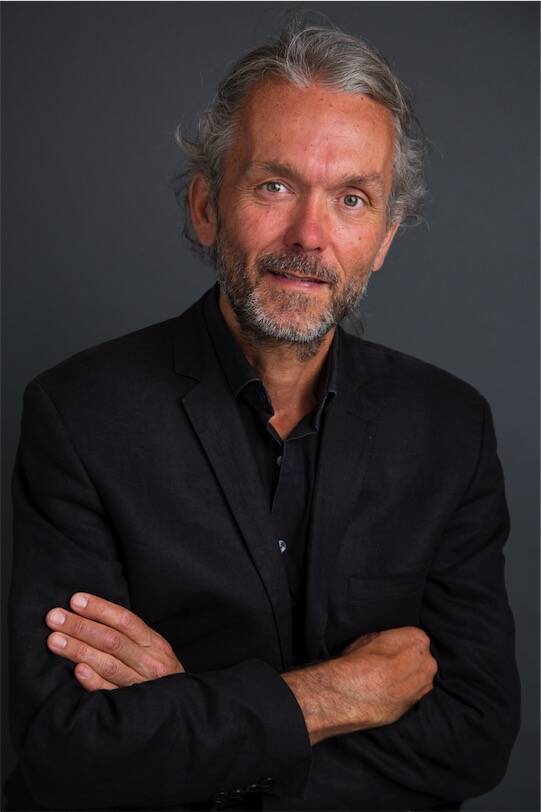
Emmanuel COSTE
Architect DPLG
Founder and President of COSTE Architectures
Born in 1966 in Montpellier, Emmanuel Coste trained in architecture at the École d’architecture du Languedoc-Roussillon, from which he graduated in 1990. From early on, his career was distinguished by a dual focus: the rigour of public projects and the search for meaning in the act of building.
From his earliest professional years, he worked on facility projects for local authorities. In Grenoble, he completed his national service as chief architect at the City Engineering Works Directorate, before continuing his experience internationally, notably in Morocco, for the cities of Casablanca and Marrakech. These formative years strengthened his interest in public architecture, the urban dimension and the social responsibility of the project.
On returning to Montpellier, Emmanuel Coste joined the agency founded by his father, François Coste. There he took an active part in projects and competitions, particularly in the field of educational buildings, while developing a project culture grounded in rigour, dialogue and transmission.
In parallel, he became involved very early in the exploration of digital tools applied to architecture. A pioneer in the use of computer graphics, he founded an association in 1988 dedicated to the dissemination of these tools to architects, and taught at the École d’architecture du Languedoc-Roussillon. Convinced of the potential of 3D modelling, then of BIM, he actively contributed to the evolution of practices, a recognition crowned in 2014 when he and his team won the first BIM d’Or.
In 1996, winner of the Europan competition, Emmanuel Coste opened a new chapter of his career by founding COSTE Architectures in the Paris region. The agency settled in Houdan, in the Yvelines, and grew rapidly, both in France and internationally. It distinguished itself through demanding and innovative projects, combining public architecture, complex facilities and environmental research.
A major milestone in this journey was reached in 2007 with the construction of La Bonne Maison®, designed for Yann Arthus-Bertrand as part of the television programme Vu du Ciel. This manifesto project marked a decisive turning point and durably established the agency in the field of low-carbon architecture, then positive-energy architecture. It paved the way for several emblematic projects, including the Natural Positive Building, the agency’s headquarters, and the Maison Canopée, awarded for its energy performance.
Since the early 2000s, Emmanuel Coste has also developed recognised expertise in the design of aquatic facilities: public swimming pools, water-sports centres, thermal complexes. He explores the relationship between architecture, water, energy and uses, integrating innovative ecological solutions and placing user health and well-being at the heart of the project. His commitment to architectural quality extends within professional bodies. Elected to the Council of the Order of Architects, then appointed advisory architect to the MIQCP, he supports public clients in the search for responsible and sustainable projects, adapted to contemporary uses.
In 2019, Emmanuel Coste reconnected with his family roots in the Alpes-de-Haute-Provence and opened a branch of the agency in Sisteron. This return to the alpine territory marks a profound evolution in his practice. In contact with the landscapes, climates and local building cultures, his approach turns towards a more organic, bioclimatic and integrative architecture, attentive to the existing, to resources and to natural balances.
Today, Emmanuel Coste leads COSTE Architectures in a spirit of continuity and transformation. He favours rehabilitation, reuse, biosourced materials, soft forms and the integration of natural elements — water, air, light, plants — to design architectures on a human scale, sensitive to places and sustainable through time.
Through this committed practice, he pursues a simple and demanding conviction: architecture is an act of responsibility, a space of relation, and a lever for positive transformation.