Autonomous BW Hotel
Energy Integrative Innovation // Rambouillet
The project
Client: Hôtel Amarys Best Western Rambouillet
Programme: Extension of a hotel — Total self-sufficiency prototype
Construction value: €2,400,000 excl. tax
Year of studies: 2020-2021 — Construction postponed due to the Covid crisis
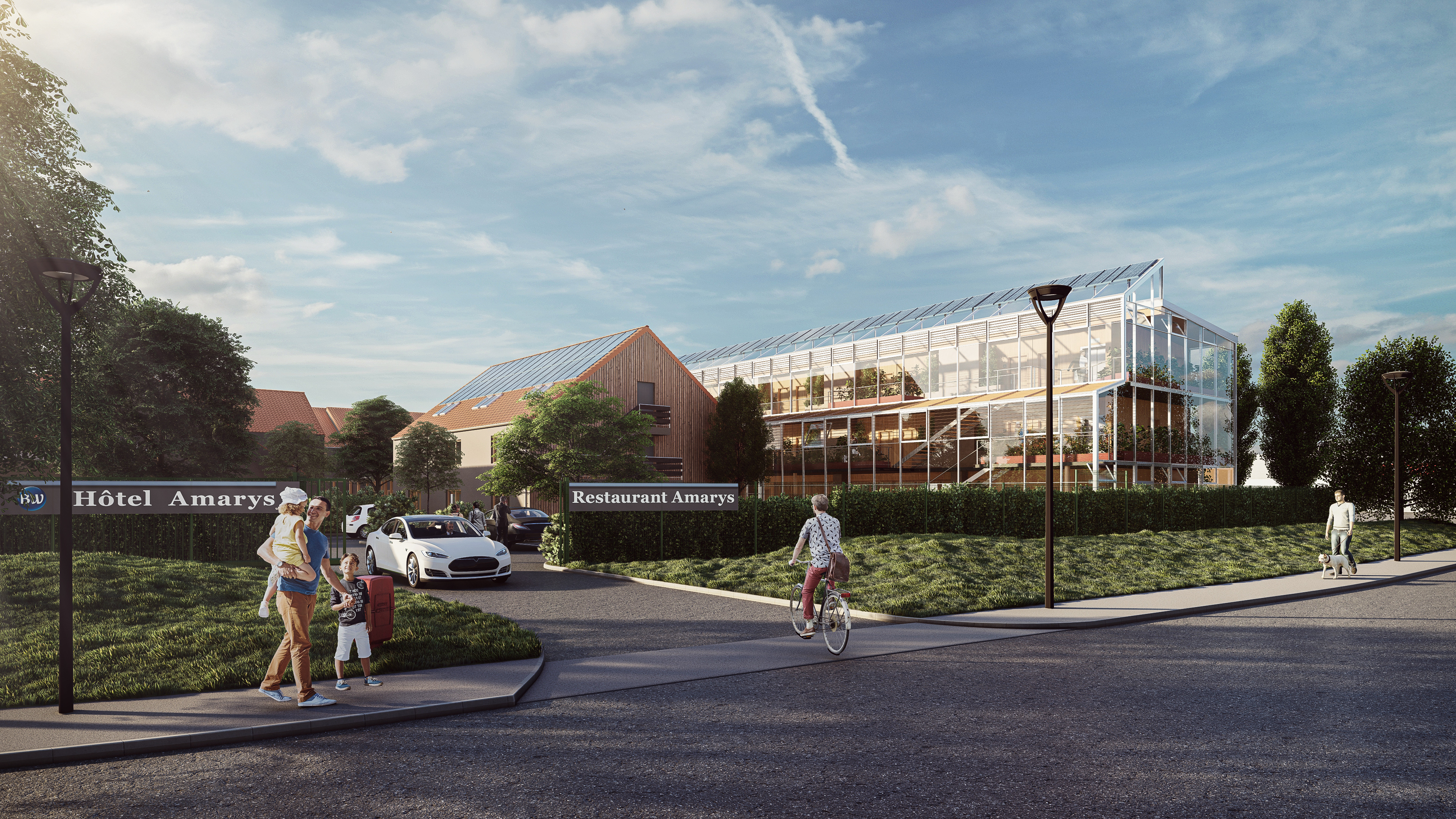
Project overview
Project overview:
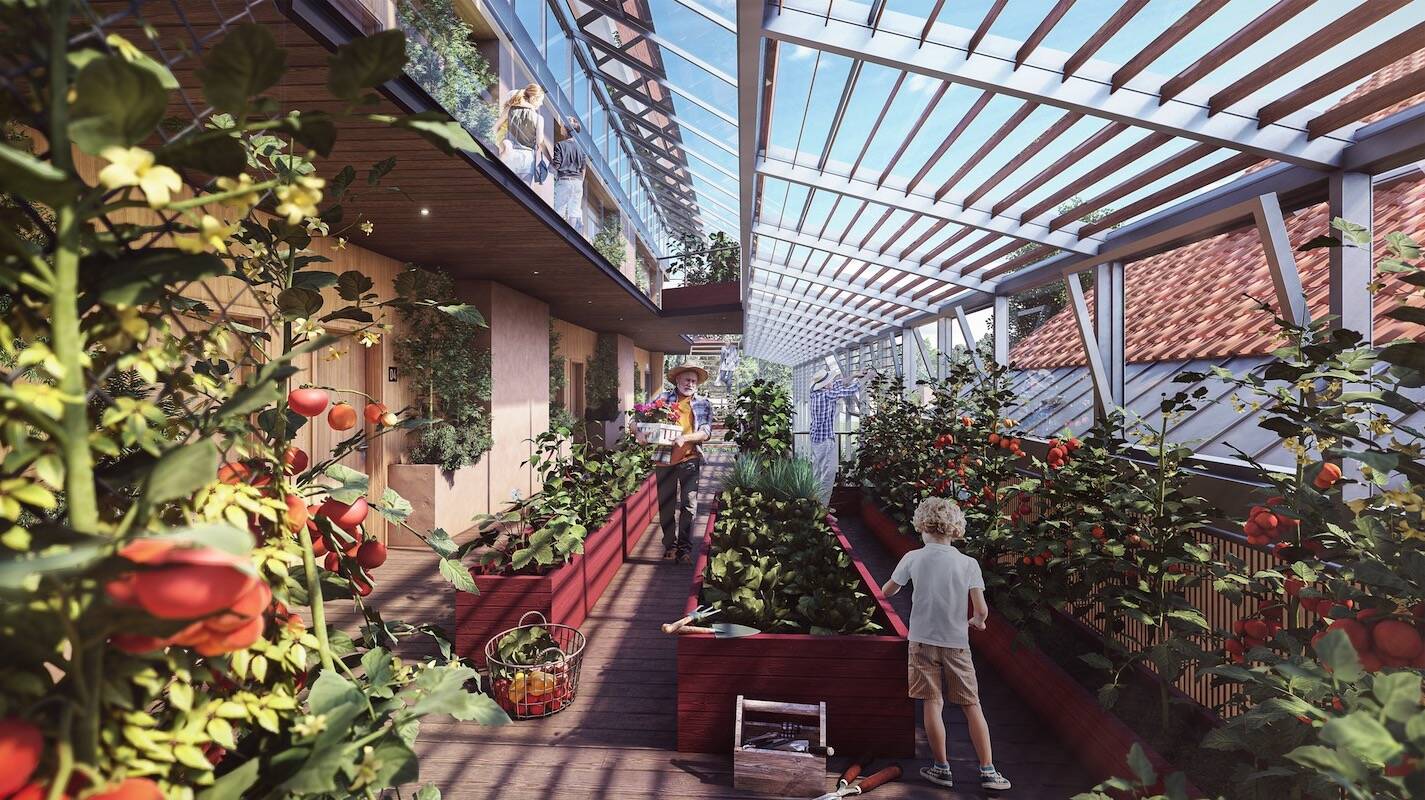
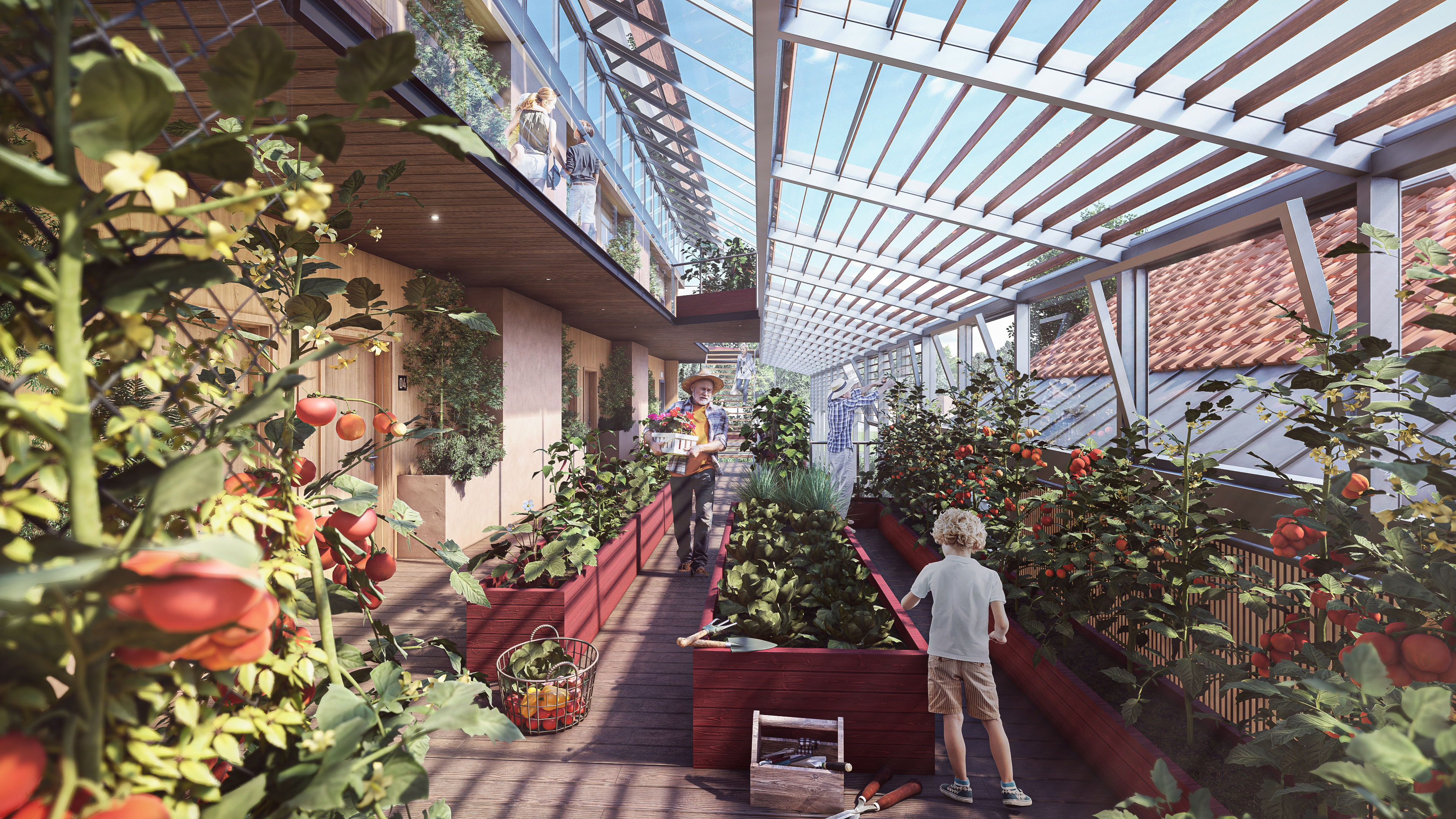
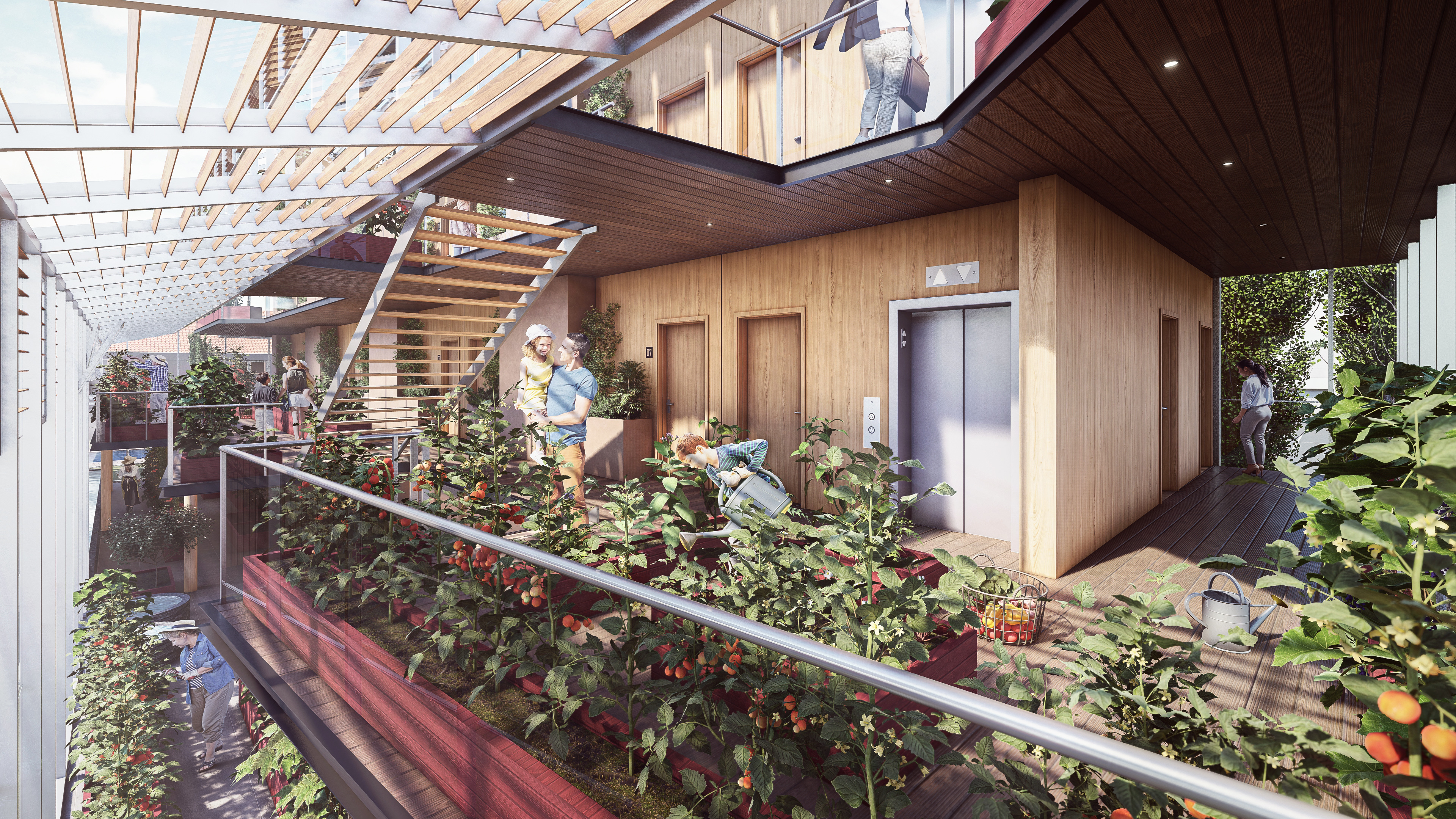
The project is the extension of the existing hotel through the creation of a new building with a rich and innovative programme. It combines 14 large hotel rooms (22.5 sqm) on the upper floors, with — on the ground floor — a spacious breakfast room and a sports & wellness area (gym, changing rooms, and direct covered access to the swimming pool and saunas), all wrapped within a glasshouse bathed in light, hosting hanging gardens used to grow vegetables and fruit, as well as aquaponics.
This new building is set against the existing building while respecting its original architecture. A slight extension of the existing roof creates the transition between the two buildings. The glasshouse gives the new building a certain lightness, even though it is taller.
An innovative construction system
The hotel's extension was designed with an innovative, out-of-the-ordinary construction system, in keeping with a sustainable-development approach. The 14 rooms are manufactured off-site in 3D, entirely in timber. This allows assembly to take place exclusively in a factory, leading to very rapid on-site installation, with worksite nuisances halved in time compared with a conventional construction site. The room modules will arrive on site fully assembled and will be stacked on top of one another within a few days.
The ground floor located beneath the rooms will also be off-site 2D — i.e. timber walls assembled in a factory and then placed on site.
A glasshouse on the south side, made of glass and recycled aluminium, will be set against the timber modules and partially enclose them, creating a thermal-buffer interior space where an ideal climate is recreated for the crops and hanging gardens.
This construction system allows speed and simplicity on site, gives lightness to the structure, allows the use of biosourced and recycled materials, avoids excessive use of concrete (which will be present only in the foundations), and allows the building to be dismantled and recycled (cradle to cradle — the concept of an infinite product).
Sobriety, bioclimatic design and energy
The energy production system tends towards sobriety because it is simple (no large technical equipment), thanks notably to the heating and cooling bioclimatic action of the glasshouse.
Heat input:
The glasshouse, along its long stretch of façade, faces due south, with gables to the west and east. Well oriented, it captures the benefits of its outdoor environment. The sun's rays and warmth diffuse across the entire façade and naturally heat the building. A climate well is added as a complement to heat the air, especially in cold periods. For domestic hot-water production, a small heat pump (HP) is added.
Cooling:
In summer, the planned brises-soleil reduce solar gain. Automated opening systems on the vertical walls of the glasshouse, linked to a small weather station, allow natural cooling through sufficient cross-ventilation. High-evaporation plantings on the ground floor, along with the aquaponics water tanks, allow natural evaporation and cooling within the glasshouse.
Air circulation:
Natural ventilation is provided by air flowing through the glasshouse and the modular timber rooms, maintaining good ventilation throughout the building and distributing the air heated or cooled by the climate well.
Electricity:
A long array of photovoltaic panels provides the building's electricity production.
Recovery and recycling:
Rainwater is collected and stored for irrigating the crops.
Plant and kitchen waste from the restaurant is collected to produce compost through vermicomposting, enriching the soil of the glasshouse market gardens.
Ambition:
This project is in line with a Négawatt® approach focused on the energy transition (improved thermal performance, reduced energy consumption) and aims to be BEPOS (positive-energy building). A building that produces more energy (electricity/heat) than it consumes for its operation, with a target of less than 50 kWh/sqm/year of energy consumption.